Tuesday, 29 January 2019

Lapbook Tutorial #2

Have you ever wanted to make lapbooks that are different sizes?

This video demonstrates how to make a mini-lapbook base. They're used for the mini-lapbook packs I have on TeachersPayTeachers and Currclick and we've also used them for quick projects than can be completed in a day.
For instance, we made a quick Denmark one for book group - it had a flag, map, a layered minibook with information about the country and a minibook about Hans Christian Anderson. All the minibooks were made from scratch. The covers had written titles for the most part, but The Girl drew a picture of the little mermaid on the front of the Hans Christian Anderson minibook.

We've also used this method to make bigger lapbook bases to use as a display board when we have done geography fairs at our local Home Ed group. We used stiffer card from a cardboard box for that and covered it in coloured paper :)

I hope you enjoy this sort video. I will be making more, so subscribe to my YouTube channel to make sure you don't miss them :)


Happy Exploring!


Sign up to the BOW email list to receive
the latest information, best prices and exclusive subscriber-only discounts 


Saturday, 12 January 2019

Lapbook Tutorial #1

How to make a lapbook base from an A4 document wallet

This is my favourite way to make a lapbook base. It's very quick and easy.


Make sure to buy good quality document wallets. The stronger, the better. Avoid the ones from the pound shop. They tend to be grey inside and VERY flimsy. It's worth paying a bit extra, believe me. Our lapbooks have been taken out so often to be admired, re-explored and re-read and I've found that the cheap wallets just don't hold up to so much handling, much to Boykin's disappointment.

I'm so glad that we found lapbooks. They encouraged him to take a real pride in his work  👩

Happy Exploring!


Sign up to the BOW email list to receive
the latest information, best prices and exclusive subscriber-only discounts 


Friday, 4 January 2019

Woohoo! I won an award!

Have you spotted the lovely bright Blue Ribbon in the sidebar? -------->

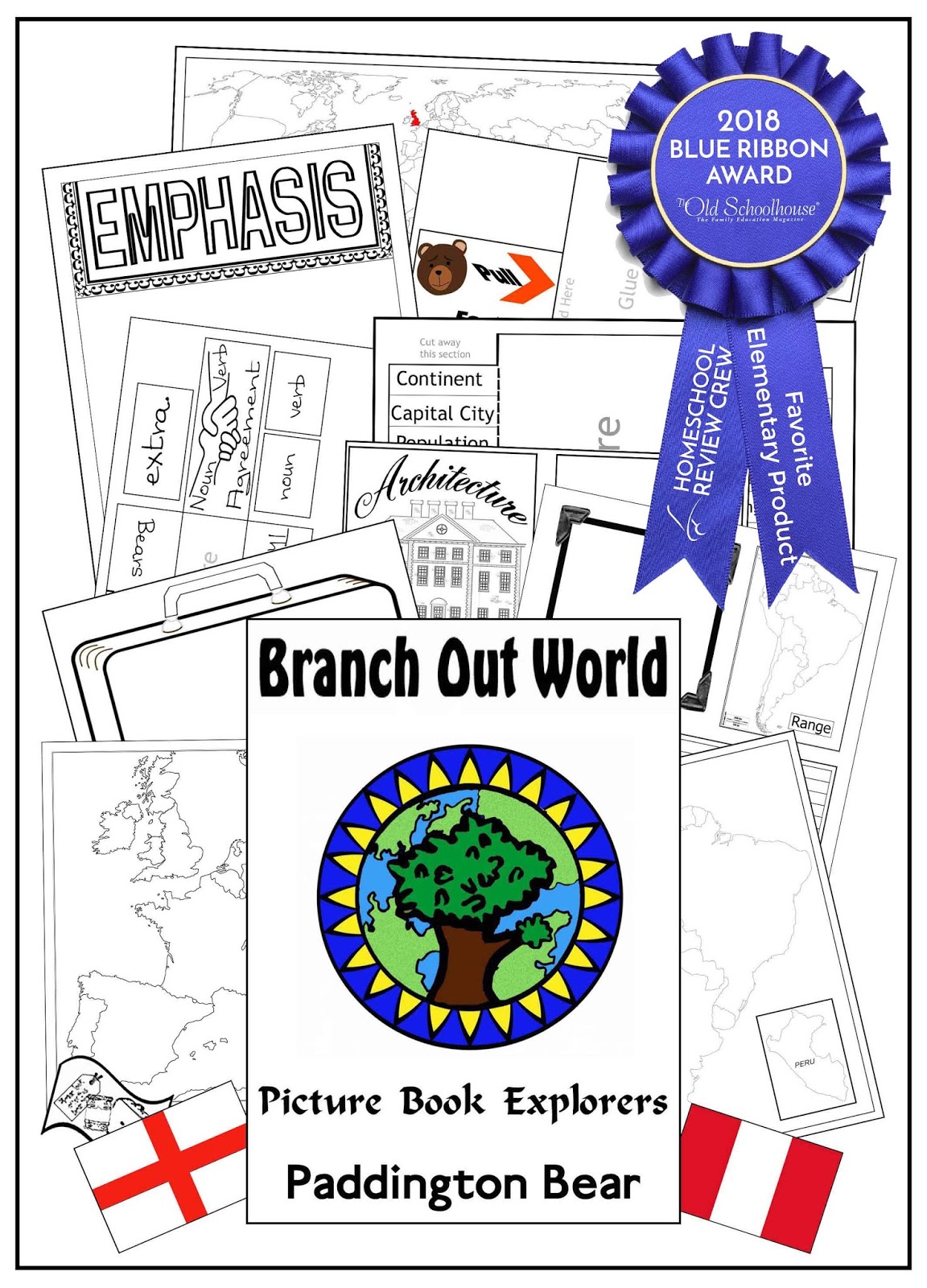
I'm so excited to be able to tell you that I have received this Blue Ribbon for Favourite Elementary Product 2018 as voted by The Old Schoolhouse Review Crew for Picture Book Explorers ~ Paddington.

This means so much to me because the voting was done by other home educating parents. These are people who use  a lot of different resources and are very discerning about quality and value. I don't mean simply monetary value, but real, educational value. I feel very honoured and humbled to receive this 👩

Oh my goodness! Is this post turning into an Oscar speech? I am just so grateful that these family took the time to learn and explore with this pack. Thank you, thank you all 😍

You can find links to all the different reviews here.

My own favourite memories of exploring Paddington with my own children have to be all the foam activities - meringues, elephants toothpaste, foam painting Paddington...


… and shaving foam fun 😂


There was a good dose of academic learning went on too with maps, maths, creative writing, architecture and science 📚

You may be interested to know that Michael Bond, the author of Paddington Bear was born on 13th January 1926, making this a perfect tome to  explore the book 👩

You can find Picture Book Explorers ~ Paddington on the Branch Out World website, on Teachers Pay Teachers and Currclick.

I'd love to know what messy fun your kids get up to. Leave a comment below :)

Happy Exploring!

Sign
up to the BOW email list to receive 
the latest information, best prices and exclusive subscriber-only discounts 


Thursday, 2 August 2018

Summer Learning

We've really been enjoying the long, unusually hot summer days around here, but I can't say we were sorry to see the weather break and the rain come pouring down. Our grass was turning brown and our plants were looking slightly wilted. The rain was so welcome. It cooled the air, greened the garden and refreshed our energy levels. It brings the familiarity of the usual summers we get in our hilly part of northern England :)

We are a year round home educating family, so the summer holidays usually have a minimal impact on us. This year is a little different because The Girl started college last September and this is her first official six week holiday. We always lighten the regular load a little at this time of year and spend much more time on free-flow learning paths that arise from opportunities that aren't always available in term times.

One opportunity we've always enjoyed is the Summer Reading Challenge. It's a great way to encourage kids to read, not that mine needed it really. The scheme is aimed at 4 to 11 year olds, although some libraries will let them take part even if they're a bit older. The challenge is to read six library books over the school holidays, recording them and collecting rewards along the way. Libraries often have other related activities on over the summer too.

We've always enjoyed the Summer Reading Challenge, but this year Boykin decided that he is too old for it. I remember how proud he was to be able to take part for the first time when he was 4 and a half. It has been such an important part of our summer season for many years. They were very keen to read their six books, collect their stickers, move along the challenge board and receive their medal at the end. They would take part in the competitions and loved going to the weekly craft sessions. We have been so blessed to live so close to an active little library. Happy memories :)

Libraries are great places for all sorts of free summer activities - craft days, STEM sessions, story times, author visits and more. It's well worth checking what's on at your local library over the next month :)

Flash Sale 
25% off all BOW resources at Teachers Pay Teachers with code 
BTSFRESH

Thursday, 5 July 2018

Summer Learning Loss

Summer learning loss isn't something that poses much of a problem for most home educators. Many families are fully child-led and don't follow specific curricular or have specific times of day for learning. And even if they do, lots of these families are year-rounders, taking breaks as and when it suits them rather than sticking to school holidays. But for some families, especially those who have some children in school and others out, school holidays play a big part in their lives and summer learning loss can sill happen. I found out the hard way when my home educated kids once asked to do the summer holidays as if they were at school. After a six week break from any kind of formal learning, it took them two whole weeks to settle back into their routine and be able to move forward with their studies. They found it so difficult that they asked never to do it again!
Exploring The North Wind & The Sun
Summer learning loss happens because children have six weeks away from their regular routines as they spend time with their families or in holiday clubs. They forget a lot of what they have been learning in school and often complain of boredom as they are struggle with the lack of regularity. It can set them at a real disadvantage when they go back to school in September. You'll be glad to hear that you can help them keep learning by having some light routine to your days during the holidays and by engaging in educational activities with your children.
Understandably, they want a break from anything that looks like school text books or exercise books, and you want to provide them with activities that they will enjoy. This is where Picture Book Explorers come to the rescue. Each pack is filled with suggestions for hands-on activities and discussions that can be used in daily focussed family time. Even by simply reading the book and doing just one activity every day you will be helping your child to keep learning through the summer holidays, tackling boredom at the same time. By engaging with your child in these activities you will be stoking their love of learning because they will be having fun with their family and creating special memories to treasure.

Exploring Oscar Cat-about-town
Extend the adventure by visiting places of interest that tie in with the PBE theme. You'll find some suggestions in the packs, or you may have your own ideas of what's available locally. (I'd love to know about them, if you do.) Expect to go off-piste as your child becomes interested in new ideas and wants to delve deeper into new topics.  Visit the local library together, pick up books on the subjects covered in the packs and select more books written by the same author as the picture book you are exploring.

Why not create a souvenir scrapbook of your summer learning? You can add their artwork, any photographs you take, postcards of places you visit, entry tickets, cuttings from leaflets, newspapers and magazines, and any completed notebooking pages or minibooks from the PBE pack. Remember, the aim is to have fun as a family whilst learning, so read the pack before you start and select the activities carefully, choosing the ones that you know your child will love :) Keep it playful and light-hearted and be prepared to follow your child's lead as they take you on a journey of learning and love.


Exploring I Took The Moon For a Walk

Happy Exploring!


Sign up to the BOW email list to receive
the latest information, best prices and exclusive subscriber-only discounts 


Wednesday, 20 June 2018

Keeping a record

In the introduction of all Picture Book Explorers guides, you will find advice on how to keep a record of your child's learning. This is mostly achieved through the suggested activities done by the child themselves. But what if your child doesn't like writing or isn't ready to write sentences or stories yet?

Photograph by Les Anderson on unsplash.com
You have to decide what is important to you and your child. Are you wanting to keep a record of your child's knowledge and understanding? Or are you wanting them to produce some actual writing?

Lots of the activities in Picture Book Explorers literature based unit studies can be completed as conversations with no need of written records at all. You can, of course, keep your  own notes of areas that you or your child would like to follow-up in future. But if recording your child's knowledge and understanding is your goal, there is room for plenty of creativity without pressurising emergent writers into producing reams of work unwillingly. Conflict isn't particularly conducive to creating a happy learning environment. (Believe me, I know 😢)

In Day 2 of each Picture Book Explorers topic pack, you will find a narration activity. Based on Charlotte Mason principles, narration will help you to discover just how much of the story your child has remembered, how much they have understood and which parts of the story jumped out at them. It helps to build the skills needed for future written work.

Narration can take different forms. A story can be retold with pictures or as a comic strip. It can be re-enacted as a short play or even as a short animation if your children feel so inspired. I have wonderful memories of my own children acting out some of their favourite stories in the garden, much to the bemusement of passers-by 😀

Let your children get creative when they are filling in the minibooks in lapbooks and Logbooks. Not everything has to be answered in writing. When learning about Marco Polo, we glued ground cinnamon, tea leaves, gold foil, pieces of wool and silk into our minibook as examples of the goods that travelled along the Silk Road. In one of our older projects, my son made a fantastic collage of a  boat to show how the Anglo-Saxons travelled to England.


Let your kids get creative with how they want to show their knowledge and understanding. Encourage them to make their lapbooks and Logbooks into unique souvenirs of their own personal learning journeys 🚀

If your goal is to practise the physical act of writing, it is worth breaking it down into small chunks, especially with younger children and/or reluctant writers. It can be overwhelming to have to think about content and the actual mechanics of writing every...single...time. When focussing on content, some children will find it much easier to type their answers. They can print out their work and stick it into the Logbook or lapbook, maybe with the addition of an extra flap or pocket.

For beginner writers, or the most reluctant, it can be enough to encourage them to write the title for themselves, and then act as scribe for them if they want to give longer answers in their Logbooks. They may enjoy labelling and naming their artwork at this stage too.

As they progress, more skills can be developed. I have found that it helps to focus on one area at a time with each written answer. For instance, the focus may be making sure all the letters are the correct heights. Or today you may be focussing on capital letters and full stops. Another day you may focus on spelling, or punctuation, legibility, sentence structure or content. Obviously, these requirements will change according to age and ability, but for me, one of the beauties of minibooks  is that often, they require short written answers that never seem too onerous, even for the most reluctant or inexperienced writer ✒

Download this free Handy Writing Helper guide. Print it out, cut out the hand, fold the fingers in and fold out the digit that  your child wants to focus on for each handwriting session. Eventually, all the fingers can be left open so that they cover all areas at once and be reminded of their own achievements 😊


Happy Exploring!